
Demand for Health and Wellness Foods in USA 2025-2035
The demand for health and wellness foods in the USA is valued at USD 183.7 billion in 2025 and is forecasted to reach USD 328.6 billion by 2035, reflecting a CAGR of 6.0%. Demand is supported by increased focus on preventive nutrition, weight management, and digestive wellness. Consumers seek nutrient-dense products with reduced sugar, sodium, and artificial additives. Food manufacturers expand fortified, plant-based, and clean-label offerings to align with wellness priorities that influence daily purchasing decisions. Functional foods hold the lead position due to their targeted health benefits, including improved immunity, metabolic support, and gut health. These products include probiotics, high-protein snacks, enriched beverages, and fortified cereals selected by consumers seeking added nutritional value in routine diets.
The West, South, and Northeast regions record the highest uptake, supported by strong retail visibility, broad distribution networks, and higher adoption of healthier food preferences among urban and millennial demographics. Growth is reinforced by established foodservice chains integrating wellness menus and by the continued expansion of omni-channel grocery retail. Key suppliers include Nestlé S.A., Danone S.A., PepsiCo Inc., General Mills Inc., and Kraft Heinz Company. Their priorities include reformulation with natural ingredients, portion-controlled packaging, and wider product placement across online and specialty nutrition channels.
Quick Stats for USA Health and Wellness Foods Demand
- USA Health and Wellness Foods Sales Value (2025): USD 183.7 billion
- USA Health and Wellness Foods Forecast Value (2035): USD 328.6 billion
- USA Health and Wellness Foods Forecast CAGR (2025-2035): 6.0%
- Leading Type in USA Health and Wellness Foods Demand: Functional Foods
- Key Growth Regions in USA Health and Wellness Foods Demand: West USA, South USA, Northeast USA
- Top Players in USA Health and Wellness Foods Demand: Nestlé S.A., Danone S.A., PepsiCo Inc., General Mills Inc., Kraft Heinz Company
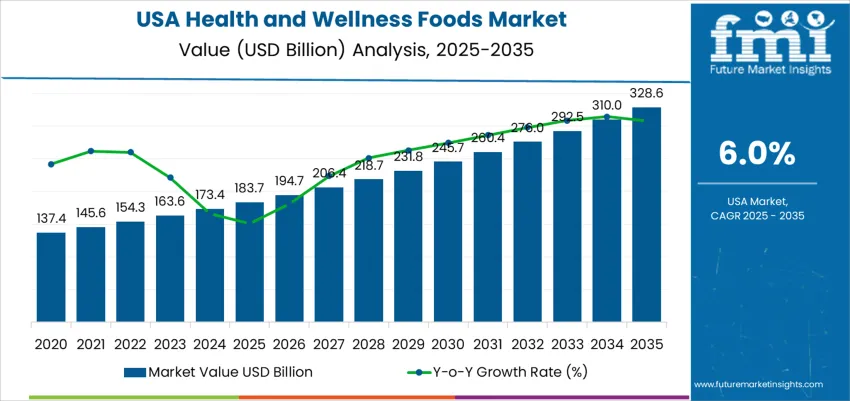
What is the Growth Forecast for Health and Wellness Foods Industry in USA through 2035?
Health and wellness foods in the United States show a strong Growth Contribution Index driven by broad consumer adoption across multiple dietary segments. The category benefits from rising demand for clean-label products, functional nutrition, and transparency in ingredient sourcing. Segments such as plant-based proteins, gut-health formulations, low-sugar snacks, and immunity-focused beverages contribute significantly to incremental gains. Retail expansion in natural aisles, digital grocery channels, and direct-to-consumer brands increases product accessibility and supports consistent contribution from both established firms and emerging innovators.
Regulatory and labeling initiatives that promote nutritional awareness further enhance contribution from reformulated products containing reduced additives, minimal processing, and clinically supported claims. Employers and insurance programs highlighting preventive health also encourage sustained purchase behavior. Contribution from food-service remains stable as restaurants introduce healthier menu items aligned with consumer expectations.
The growth contribution index demonstrates that no single product segment dominates expansion; instead, diverse health-forward formats add incremental value. Price sensitivity and economic conditions influence purchasing, yet the long-term contribution outlook remains positive due to lifestyle-driven demand for holistic nutrition, weight management, and chronic disease prevention in the United States.
USA Health and Wellness Foods Key Takeaways
| Metric | Value |
|---|---|
| USA Health and Wellness Foods Sales Value (2025) | USD 183.7 billion |
| USA Health and Wellness Foods Forecast Value (2035) | USD 328.6 billion |
| USA Health and Wellness Foods Forecast CAGR (2025-2035) | 6.0% |
Why is the Demand for Health and Wellness Foods in the USA Growing?
Demand for health and wellness foods in the USA is increasing because consumers place greater emphasis on preventive health, balanced nutrition and functional ingredients. Diets enriched with whole grains, high-protein sources, fiber, probiotics and omega-3 fatty acids appeal to individuals who manage chronic conditions, support gut health or seek weight management. Retailers respond by expanding shelf-space for ready-to-eat nutritious options, meal-replacement bars and fortified snacks that fit busy lifestyles.
Aging demographics and rising healthcare costs motivate many adults to adopt diets aimed at long-term health maintenance and disease prevention. Fitness and active-lifestyle trends encourage demand for clean-label, plant-based and low-sugar foods as part of holistic wellness routines. Growing awareness of ingredient transparency and environmental impact influences selection of organic, non-GMO and sustainably sourced products.
Foodservice operators and quick service restaurants respond by offering lighter meals, salads and nutritious bowls, which broadens industry access beyond retail. E-commerce platforms and subscription models further extend reach to consumers seeking convenience without sacrificing health goals. Constraints include higher prices for specialty wellness products compared with mass-market foods, which may limit access for budget-conscious buyers. Some consumers remain skeptical of functional food claims and prefer whole-food diets, which can slow adoption. Regulatory scrutiny and complexity in labeling nutritional benefits also challenge manufacturers’ product strategies.
Which Product Types and Sales Channels Lead Demand for Health & Wellness Foods in the USA?
Demand for health and wellness foods in the United States is supported by rising lifestyle diseases, clean-label preferences, and increased nutrition awareness among consumers. Purchasing behavior heavily reflects preventive health priorities, weight-management trends, and diet customization. Growth aligns with functional ingredients, plant-based formulations, and beverages positioned for hydration, immunity, and digestive benefits. Retail assortment continues expanding as households shift toward foods supporting daily wellbeing and balanced calorie intake.
By Product Type, Functional Foods Lead Consumption
Functional foods represent 43.7%, driven by fortified snacks, probiotics, omega-rich items, and ingredients supporting energy, digestion, and immunity. Better-for-you (BFY) foods hold 26.0%, serving reduced-sugar, low-fat, and low-sodium preferences in mainstream groceries. Healthy beverages contribute 18.0%, including kombucha, infused waters, and natural energy drinks, driven by hydration-plus-nutrition demand. Organic foods hold 7.3%, concentrated among premium buyers prioritizing chemical-free production. Other product types make up 5.0%, covering specialty dietary offerings. Product adoption reflects active living, snack replacement, and multifunctional nutrition targeting convenience-first consumption.
Key Points:
- Functional foods lead through fortified and immunity-supporting intake
- BFY products gain traction in sodium- and sugar-conscious diets
- Healthy beverages expand with natural, clean-label hydration options
By Sales Channel, Offline Retail Dominates Distribution
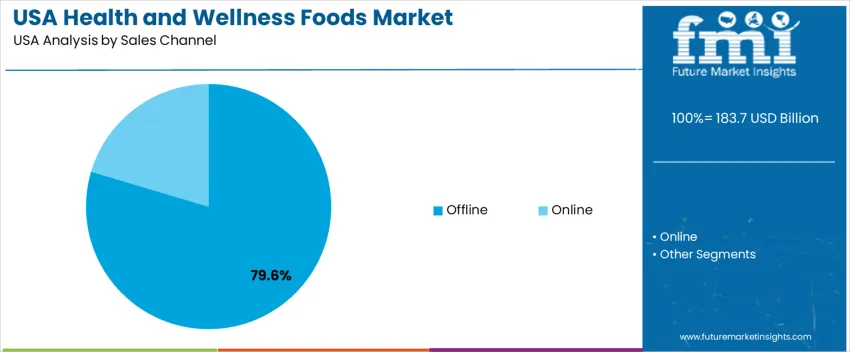
Offline sales channels account for 79.6%, supported by supermarket, hypermarket, and club store formats offering wide product variety and fresh-category dominance. In-store purchasing benefits from visibility of functional snacks, chilled wellness beverages, and lifestyle-aligned food ranges. Online channels hold 20.4%, increasing through subscription delivery, rapid-commerce grocery platforms, and direct-to-consumer wellness brands. Channel allocation reflects reliance on routine grocery purchases for refrigerated and daily-consumption products.
Key Points:
- Brick-and-mortar retail drives volume through weekly household shopping
- Online ordering expands convenience for functional and specialty SKUs
- Fresh foods remain primarily offline due to cold-chain requirements
What are the Drivers, Restraints, and Key Trends of the Demand for Health and Wellness Foods in the USA?
Growth of preventive health behaviors, increased focus on clean nutrition and rising demand for functional benefits in everyday foods are driving demand.
In the United States, consumers prioritize foods that support long-term health outcomes such as heart health, immunity and weight management. Retailers expand assortments of nutrient-dense items including whole grains, probiotic dairy, antioxidant-rich snacks and plant-based proteins to meet demand for practical wellness improvements. Workplace wellness programs and digital fitness platforms reinforce daily nutrition choices linked to performance and recovery. Food manufacturers reformulate products to reduce sugar, sodium and artificial additives in order to improve labeling transparency and meet expectations for clean ingredient lists. Convenience remains important, and ready-to-eat healthy options grow in popularity among working adults and students seeking quick meals without compromising nutritional goals. This behavior supports strong demand across mainstream and premium price tiers.
Higher retail pricing for premium health products, nutritional skepticism among cost-sensitive consumers and regulatory scrutiny of health claims restrain demand.
Health and wellness foods often carry higher prices than traditional packaged foods, which limits frequent purchase among households managing tight grocery budgets. Some consumers question whether reformulated options truly provide measurable health benefits, slowing adoption outside health-enthusiast groups. Strict oversight on functional or therapeutic claims reduces the ability of brands to highlight specific outcomes, making it harder to communicate value in crowded categories. These factors restrict broader penetration into mass-market purchasing routines.
Shift toward plant-forward diets, increased use of personalized nutrition platforms and rising integration of wellness products in online grocery channels define key trends.
Stores expand plant-based and flexitarian items to support preferences for sustainability and reduced meat intake. Personalized wellness apps recommend foods based on activity level and metabolic goals, promoting frequent subscription purchases of healthier snacks and fortified beverages. Online grocery sales accelerate adoption by enabling easy access to premium wellness brands that may not appear in smaller physical stores. Brands improve packaging with portion-controlled formats, clear nutrient labeling and QR-linked product information to support informed decisions. These developments indicate sustained, lifestyle-driven demand for health and wellness foods across the United States consumer landscape.
Analysis of the Demand for Health and Wellness Foods in the USA by Region
Demand for health and wellness foods in the United States is strengthening as consumers prioritize nutrition, preventive health, and clean-label ingredients. Retail aisles are shifting toward fortified snacks, organic staples, gluten-free bakery products, plant proteins, and functional beverages designed for immunity, gut health, and weight management. School-meal reforms, obesity-reduction initiatives, and growing fitness culture help maintain consistent growth across demographics. Digital grocery platforms accelerate accessibility to specialty dietary products. West USA holds the highest expansion at 6.9% CAGR, followed by South USA at 6.2%, Northeast USA at 5.5%, and Midwest USA at 4.8%, reflecting regional contrasts in lifestyle preferences, income distribution, and supply chain penetration.
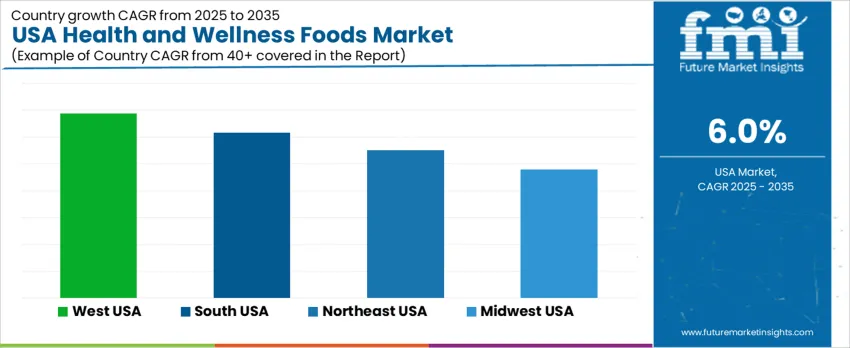
| Region | CAGR (2025-2035) |
|---|---|
| West USA | 6.9% |
| South USA | 6.2% |
| Northeast USA | 5.5% |
| Midwest USA | 4.8% |
How is the West USA driving demand for health and wellness foods?
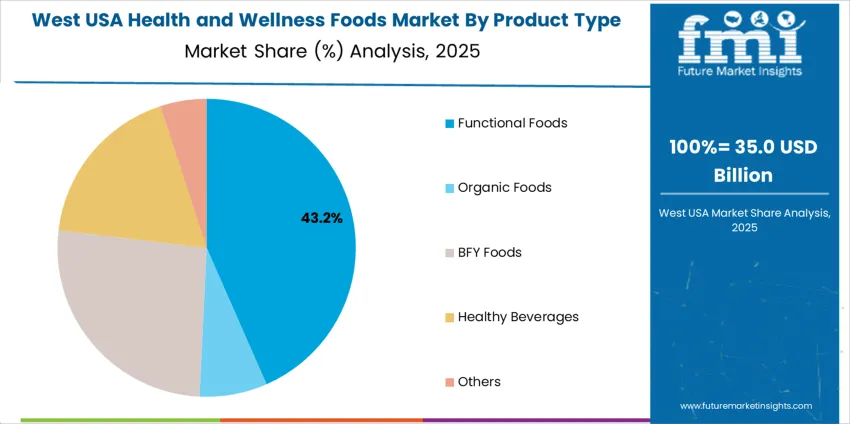
West USA leads with a 6.9% CAGR, driven by strong adoption of organic, vegan, and functional-nutrition categories across California, Washington, and Oregon. Consumers regularly seek reduced-sugar and fortified packaged foods positioned for digestive health or high protein intake. Fitness-centric lifestyles and a large base of early adopters enable quick acceptance of emerging nutritional science trends including adaptogens, superfoods, and regenerative agriculture-sourced products. Retailers expand chilled functional beverages and plant-based proteins while food-service operators integrate wellness-aligned menu options. Supply networks emphasize clean-label product verification and sustainable packaging requirements imposed by eco-conscious shoppers. E-commerce subscriptions for diet-specific groceries strengthen recurring procurement patterns.
- Organic and vegan selections shaping premium healthy shelves
- Functional beverages and fortified snacks gaining traction
- Active lifestyle industries boosting protein-centric foods
- Sustainability compliance influencing package and sourcing choices
How is the South USA shaping demand for health and wellness foods?
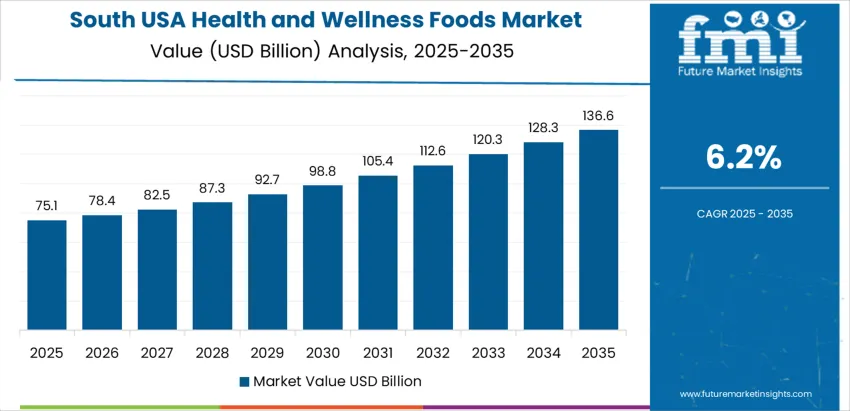
South USA grows at 6.2% CAGR, supported by rising nutrition awareness and specialty-food penetration into suburban retail. Manufacturers emphasize better-for-you versions of regional favorites including lower-sodium meats, whole-grain bakery items, and alternative-oil frying solutions. Weight management and diabetic-friendly options gain importance amid high lifestyle-disease prevalence. Distribution access through Gulf Coast logistics hubs improves availability of fresh and refrigerated wellness SKUs. Retail chains use promotional pricing to encourage trial of plant-based and allergen-free categories previously considered niche. Growth also reflects improved diet-education programs spanning schools and workplace cafeterias.
- Health-risk mitigation driving dietary reform choices
- Specialty-food access improving through suburban retail networks
- Value pricing and promotions expanding trial purchases
- Fresh and chilled healthy foods benefiting from logistics connectivity
How is the Northeast USA influencing demand for health and wellness foods?
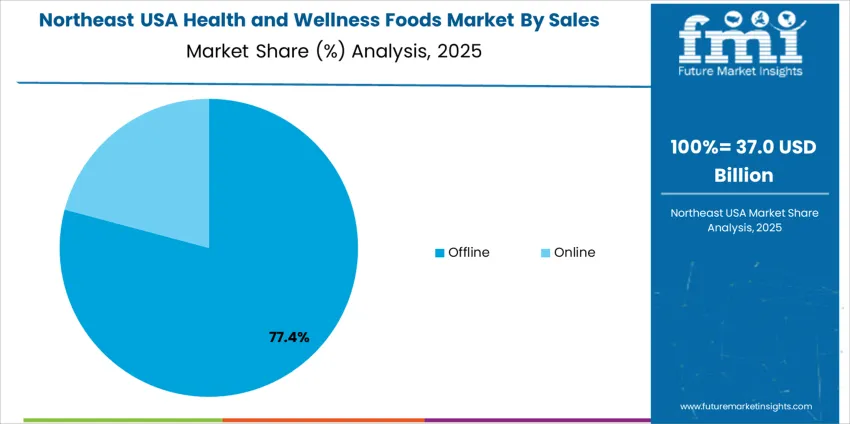
Northeast USA advances at 5.5% CAGR, anchored by dense metropolitan industries with high disposable income and strong clean-label adoption. Meal-simplification trends elevate demand for ready-to-eat wellness bowls, refrigerated dips, and functional dairy products supporting immunity and digestive balance. Consumers evaluate ingredient transparency and allergen compliance with strict purchasing criteria. Food-service outlets transition toward healthier menus aligned with commuter preferences for portable wellness snacks. Retailers and cooperative industries highlight traceability, sustainability, and ethical sourcing certifications that resonate with regional shoppers.
- High share of premium wellness brands in urban retail
- Portability driving single-serve health-focused product formats
- Ingredient-safety expectations influencing supplier standards
- Ethical and traceable sourcing strengthening brand loyalty
How is the Midwest USA contributing to demand growth?
Midwest USA records 4.8% CAGR, reflecting steady household adoption of better-nutrition products through mainstream retail rather than premium-only channels. Family-focused purchasing supports value-priced whole-grain snacks, lean protein alternatives, and vitamin-fortified pantry staples. Dietitian-supported health programs in hospitals and community centers create familiarity with wellness offerings. Manufacturers tailor pack-sizes and cost structures to match price-sensitive consumer groups. Supply chains emphasize availability of staple better-for-you goods over rapid category expansion.
- Value-driven selection guiding wellness product mix
- Family dietary needs sustaining fortified staple demand
- Community health programs broadening consumer awareness
- Cost-efficient product design supporting wider accessibility
How does competitive concentration in the United States health and wellness foods segment reflect portfolio breadth, nutritional reformulation, and brand trust?
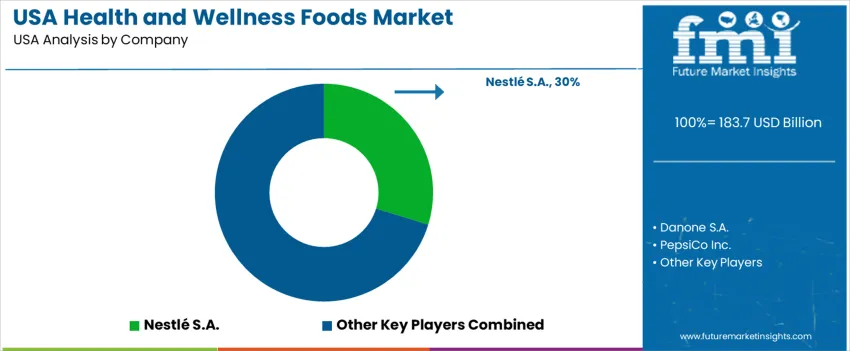
Competitive positioning in the United States health and wellness foods segment depends on nationwide retail penetration, investment in nutritional upgrades, and established consumer trust in perceived functional benefits. Nestlé S.A. holds an estimated 29.8%, driven by extensive participation in better-for-you categories including fortified beverages, plant-based offerings, low-sugar dairy alternatives, and medically aligned nutrition products. Its scale in both mainstream and specialized channels supports broad accessibility and repeat household USAge.
Danone S.A. expands through probiotic yogurts, plant-based beverages, and digestive wellness platforms. Its position is supported by targeted health claims related to gut support and balanced nutrition, particularly within refrigerated aisles. PepsiCo Inc. strengthens its role through improved formulation in snacks and beverages, including reduced-sodium savory products, hydration-focused drink lines, and increased integration of whole-grain formats.
General Mills Inc. maintains traction through cereal innovations incorporating high-fiber ingredients and simplified labeling. Its portfolio reflects consumer preferences toward portion control and recognized nutritional icons. The Kraft Heinz Company sustains share through core pantry categories while introducing incremental better-for-you variants, focusing on protein content, sugar reduction, and preservative-free recipes. Competition increasingly favors companies able to combine credible nutritional science with large-scale reformulation programs, while expanding shelf presence in natural, organic, and functional food categories within the United States.
Key Players in USA Health and Wellness Foods Demand
- Nestlé S.A.
- Danone S.A.
- PepsiCo Inc.
- General Mills Inc.
- Kraft Heinz Company
Scope of the Report
| Items | Values |
|---|---|
| Quantitative Units | USD billion |
| Product Type | Functional Foods, Organic Foods, BFY (Better-For-You) Foods, Healthy Beverages, Others |
| Sales Channel | Offline, Online |
| Regions Covered | West USA, South USA, Northeast USA, Midwest USA |
| Key Companies Profiled | Nestlé S.A., Danone S.A., PepsiCo Inc., General Mills Inc., Kraft Heinz Company |
| Additional Attributes | Dollar sales by product type and channel categories; regional adoption patterns across West, South, Northeast, and Midwest; consumer behavior shifts toward clean-label, low-sugar, and plant-forward options; growth supported by retail private labels and digital grocery demand; competition driven by nutritional innovation, regulatory compliance, and preventive-health product positioning. |
USA Health and Wellness Foods Demand by Segments
Product Type:
- Functional Foods
- Organic Foods
- BFY Foods
- Healthy Beverages
- Others
Sales Channel:
Region:
- West USA
- South USA
- Northeast USA
- Midwest USA
Frequently Asked Questions
How big is the demand for health and wellness foods in USA in 2025?
The demand for health and wellness foods in USA is estimated to be valued at USD 183.7 billion in 2025.
What will be the size of health and wellness foods in USA in 2035?
The market size for the health and wellness foods in USA is projected to reach USD 328.6 billion by 2035.
How much will be the demand for health and wellness foods in USA growth between 2025 and 2035?
The demand for health and wellness foods in USA is expected to grow at a 6.0% CAGR between 2025 and 2035.
What are the key product types in the health and wellness foods in USA?
The key product types in health and wellness foods in USA are functional foods, organic foods, bfy foods, healthy beverages and others.
Which sales channel segment is expected to contribute significant share in the health and wellness foods in USA in 2025?
In terms of sales channel, offline segment is expected to command 79.6% share in the health and wellness foods in USA in 2025.
link