
Alternative Veterinary Medicine Market Summary
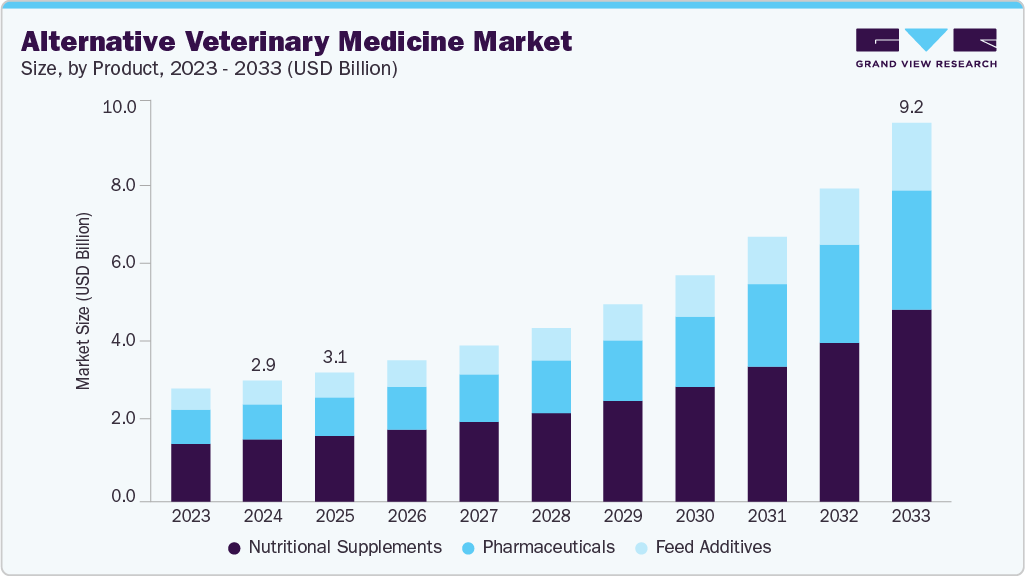
The global alternative veterinary medicine market size was estimated at USD 2.94 billion in 2024 and is projected to reach USD 9.23 billion by 2033, growing at a CAGR of 14.39% from 2025 to 2033. The market is driven by several key factors, including the growing pet population and increasing humanization of pets, which fuel demand for holistic and natural treatments.
Key Market Trends & Insights
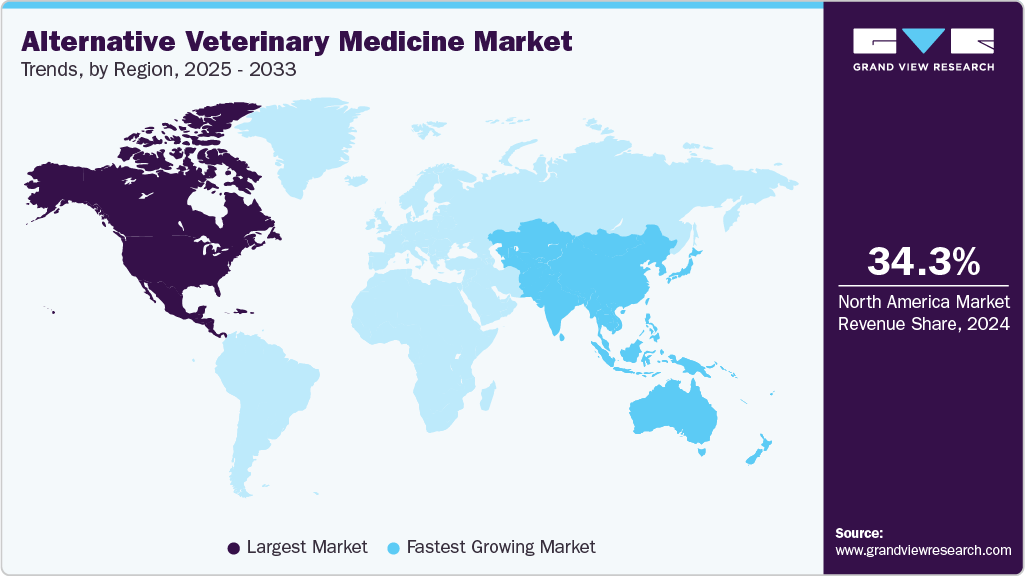
- North America alternative veterinary medicine market held the largest revenue share of 34.29% in 2024.
- The U.S. alternative veterinary medicine market dominated with largest revenue share in 2024.
- By product, the nutritional supplement segment held the largest share of 51.39% in the market in 2024.
- By animal, the companion animal segment held the largest market share in 2024.
- Based on the route of administration, the oral segment held the largest market share in 2024.
Market Size & Forecast
- 2024 Market Size: USD 2.94 Billion
- 2033 Projected Market Size: USD 9.23 Billion
- CAGR (2025-2033): 14.39%
- North America: Largest market in 2024
- Asia Pacific: Fastest growing market
Rising awareness among pet owners about the potential side effects of conventional drugs is prompting interest in alternative therapies such as acupuncture, herbal medicine, chiropractic care, and homeopathy. Moreover, according to an article published by AVMA, in May 2025, an estimated 4,000 to 5,000 veterinarians in the U.S. have completed acupuncture certification through recognized institutions such as Chi University, IVAS, CuraCore, CRI, EBVA, and CIVT. The expanding number of qualified professionals reflects the increasing acceptability and incorporation within conventional veterinary treatment. The market for alternative veterinary medicine is growing as more veterinarians use these alternative treatment modalities, increasing their credibility and pet owners’ confidence and desire for holistic care.
Similarly, according to an article published by The Hindu in October 2024, the newly released Standard Veterinary Treatment Guidelines (SVTG) by the Union Ministry of Animal Husbandry are expected to drive market growth significantly. These guidelines encourage a move toward Ayurvedic and herbal veterinary medications as safer and more environmentally friendly alternatives by attempting to limit and restrict the use of antibiotics in treating livestock and poultry. By increasing farmers’ and veterinarians’ confidence in conventional formulations, this policy initiative promotes broader use in the commercial and rural animal health sectors. In addition, Government support for Ayurveda in veterinary care is expected to boost investment, research, and development of herbal and plant-based animal health products. This will help the market grow while encouraging safer, more natural, and environmentally friendly ways to care for animals.
India Pet Ownership Statistics, 2025
|
Factors
|
Dogs
|
Cats
|
|
Estimated % of Households
|
63%
|
42%
|
|
Estimated Population
|
31.0 Million
|
2.44 Million
|
|
Approximately 11% of households in India have at least four pets.
|
||
Source: Pangolia Pte. Ltd.
Hence, India’s growing number of dog and cat-owning households highlights its rapidly expanding pet care industry and its direct impact on the market. Dogs are the most common pets in India, with about 63% of households having a dog, which adds up to roughly 31 million dogs across the country. Cats are becoming more popular too, especially in cities and apartments, with 42% of households keeping a cat, totaling around 2.44 million cats. This surge in companion animal ownership reflects changing lifestyles, increasing emotional attachment to pets, and a growing emphasis on animal welfare. As a result, pet owners are seeking natural, preventive, and holistic healthcare solutions to ensure long-term wellness for their pets.
Industry Concentration
The alternative veterinary medicine industry is growing rapidly and shows a moderate concentration level, driven by increasing dependency on herbal and natural medicines. For instance, according to an article published by VCA Animal Hospital, it is estimated that around 75% of the world’s population continues to rely on herbal medicine for primary healthcare. Historically, early civilizations emphasized the health of animals, particularly horses and cattle, which were essential for transportation, agriculture, and livelihood. As people become more aware of natural and sustainable pet and livestock care, the long-standing use of herbal medicine is helping the market grow, attracting more acceptance, investment, and demand across both companion animals and livestock.
The alternative veterinary medicine industry is witnessing moderate innovation, driven by a blend of traditional knowledge and modern scientific advancements. Companies and research institutions are increasingly integrating biotechnology, photochemistry, and pharmacognosy to validate and enhance the efficacy of herbal, Ayurvedic, homeopathic, and traditional Chinese veterinary formulations. Modern innovations include standardized herbal extracts, nanotechnology-based delivery systems, and formulation improvements that enhance bioavailability and consistency.
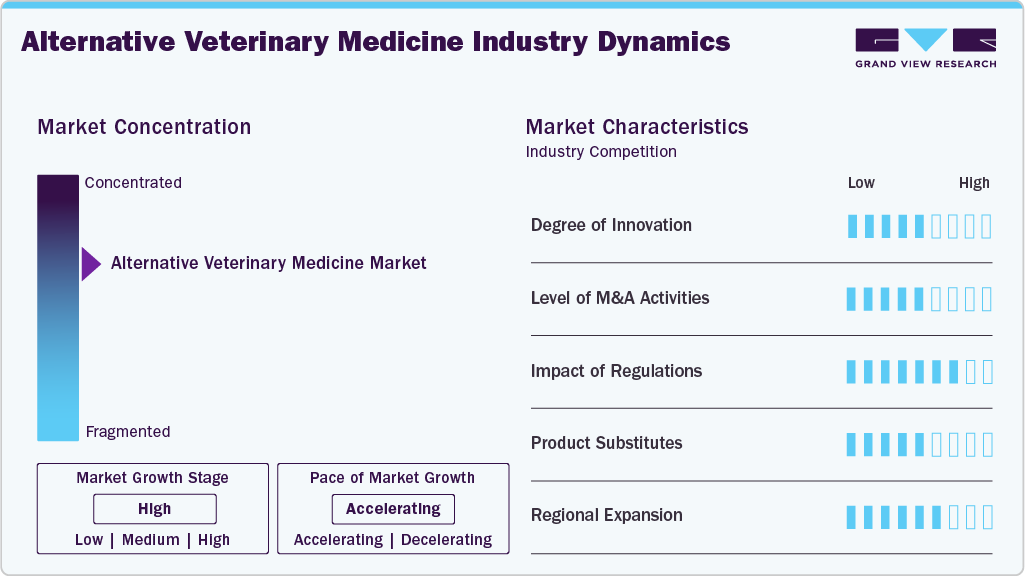
The alternative veterinary medicine industry has seen moderate mergers and acquisitions, driven by consolidation among pharmaceutical manufacturers and animal care networks. For instance, in October 2024, Better Choice Company expanded into the veterinary medicine sector, marking a significant step in its long-term growth strategy. This move follows the acquisition of SRx Health, a company recognized for its expertise in pharmaceutical compounding and animal health solutions. The acquisition is set to boost Better Choice’s ability to create and sell advanced veterinary products, covering both conventional and alternative treatments. Using SRx Health’s technology, research experience, and existing customer network, Better Choice plans to expand beyond pet nutrition and wellness, offering a broader range of animal healthcare solutions.
Regulations are crucial in shaping the alternative veterinary medicine industry, from developing new products to getting them approved and sold. Clear and supportive rules for herbal, Ayurvedic, and homeopathic veterinary products help build trust, ensure they are safe and effective, and encourage veterinarians, farmers, and pet owners to use them more widely.
The threat of product substitutes is moderate in the alternative veterinary medicine industry. The herbal, Ayurvedic, and homeopathic remedies offer natural, holistic, and low side-effect alternatives; hence, they often face competition from allopathic medicines, which provide faster and more standardized results, especially in acute or severe cases. Increasing concerns about antibiotic resistance, chemical residues in meat and dairy, and a stronger focus on preventive and sustainable animal healthcare encourage people to choose natural treatments for their pets and livestock. As more people become aware of these alternatives and scientific studies confirm their effectiveness, the reliance on conventional substitutes is likely to decrease, making herbal, homeopathic, and natural veterinary products more important in the overall animal health market.
Regional expansion significantly impacts the alternative veterinary medicine industry, enabling companies to tap into diverse animal health needs, regulatory frameworks, and consumer preferences across different geographies. Manufacturers can leverage rising pet ownership, increasing livestock production, and growing acceptance of herbal and natural remedies by entering emerging markets in Asia, Latin America, and the Middle East. Expansion into developed regions such as North America and Europe further enhances brand credibility, as these markets emphasize product quality, research validation, and sustainable animal health practices.
Product Insights
Based on products, the nutritional supplement segment held the largest revenue share of 51.39% in 2024 due to its broad applicability across companion animals and livestock, preventive health benefits, and high adoption rates among pet owners and farmers. Products such as vitamins, minerals, joint health supplements, probiotics, and immunity boosters are widely used to maintain overall animal wellness, enhance growth, and prevent disease, making them an integral part of routine animal care. Rising awareness of pet health, increasing spending on preventive care, and the perception of supplements as safe, natural, and side-effect-free alternatives to conventional drugs further drive the segment growth.
The pharmaceutical segment is the fastest-growing segment over the forecast period, as it encompasses herbal, Ayurvedic, homeopathic, and nutraceutical formulations designed to prevent, manage, and treat various animal health conditions. Moreover, the rising prevalence of diseases such as joint pain and arthritis further supports the segment growth. For instance, according to an article published by Morris Animal Foundation, in July 2024, in the U.S., around 14 million adult dogs and 90% of cats over 12 years are affected by osteoarthritis. Herbal pharmaceuticals are increasingly recognized as effective, non-invasive treatments that enhance mobility, alleviate pain, and support joint health in these pets. Growing awareness among veterinarians and pet owners regarding these herbal medicines’ safety and therapeutic benefits drives their adoption, fueling market expansion.
Animal Insights
Based on animal, the companion animals segment dominated the market with the largest revenue share in 2024, owing to the rapidly growing pet population, the increasing pet ownership, and heightened awareness of animal health and wellness. For instance, according to an article published by APPA, in June 2025, the number of households owning cats in the U.S. had risen significantly, reaching 49 million in 2024, up from 40 million in 2023, reflecting a notable increase in pet adoption. This growth indicates a stronger emotional connection between people and their pets, often called pet humanization, and contributes to higher demand for pet healthcare products, including alternative veterinary medicines. As more households welcome cats into their homes, the need for safe, effective, and holistic treatments such as herbal pharmaceuticals for chronic conditions or preventive care continues to expand, driving overall market growth in the companion animal segment.
Production animals is the fastest-growing segment in the market due to an increasing demand for meat, dairy, and other animal-derived products, prompting farmers to prioritize animal health and productivity. For instance, according to an article published by OECD, in July 2025, the projected increase in global meat consumption by 47.9 Mt over the next decade, along with a rise in annual per capita consumption by 0.9 kg/year by 2034, underscores the growing demand for healthy and productive livestock. In high-income countries, where consumers are increasingly conscious of animal welfare, environmental sustainability, and food safety, there is a stronger preference for livestock raised with natural and holistic treatments rather than conventional antibiotics or chemical drugs. This trend encourages farmers to adopt alternative veterinary medicines, such as herbal pharmaceuticals and Ayurvedic remedies, to maintain animal health, improve immunity, and ensure residue-free meat.
Type Insights
Based on type, the ayurvedic segment held the largest revenue share in 2024, due to its strong cultural acceptance, proven safety profile, and wide range of applications in companion animals and livestock. For instance, according to Pashudhanprahare, Ayurveda has historically emphasized animal welfare, treatments, disease management, and surgical support in veterinary medicine. Its safety and efficacy are well-established, with virtually no side effects, positioning it as a highly reliable alternative to conventional medicine. This reassures pet owners, allowing them to confidently pursue natural healing options for their animals, knowing that their pets can benefit from effective care without the risk of adverse reactions.
Traditional Chinese Veterinary Medicine (CTM) is the fastest-growing segment in the market. One of the key factors driving the segment growth is the ongoing conferences and educational events, such as the 2025 VBMA/ACVBM Annual Conference scheduled for November 8-9, 2025. These events provide a platform for veterinarians and industry professionals to gain continuing education on herbal, botanical, and holistic treatment approaches, including applications of Traditional Chinese Medicine in dermatology and herbal therapies for skin diseases. Featuring renowned experts like Steve Marsden and Diana Hermann, the conference facilitates knowledge sharing, collaboration, and exposure to the latest research and innovations in alternative veterinary medicine. By enhancing awareness, credibility, and practical adoption of these therapies in clinical practice, such conferences stimulate demand for herbal and natural veterinary products, thereby contributing to market growth.
Route of Administration Insights
Based on route of administration, the oral segment held the largest revenue share in 2024 and is growing at the fastest CAGR over the forecast period, due to its convenience, ease of use, and high acceptance among companion animals and livestock. Oral formulations, such as herbal tablets, syrups, and powders, allow pet owners and farmers to administer treatments safely and consistently without requiring specialized equipment or professional intervention. Oral route also supports long-term management of chronic conditions, including joint pain, digestive issues, and immune support, which are common targets for herbal pharmaceuticals. Oral herbal medications’ simplicity, palatability, and effectiveness enhance compliance and adoption, making them a preferred choice over injectable or topical alternatives, fueling market growth.
Topical is growing at the second fastest CAGR over the forecast period. Herbal and Ayurvedic topical formulations, such as ointments, gels, creams, and sprays, are widely used to manage skin infections, wounds, inflammation, and musculoskeletal discomfort in companion animals and livestock. This route of administration provides rapid relief, improved bioavailability at the target site, and enhanced animal compliance, particularly for pets that are difficult to medicate orally. As veterinarians and pet owners increasingly seek safe, natural, and non-invasive treatments, the adoption of topical herbal products grows, further contributing to the market growth.
Distribution Channel Insights
Based on distribution channel, veterinary hospitals and clinics accounted for the largest revenue share in 2024, serving as the primary point of access for companion animal and livestock healthcare products. These facilities provide direct distribution of herbal, Ayurvedic, and homeopathic pharmaceuticals and offer professional guidance on proper usage, dosage, and treatment regimens, enhancing product credibility and adoption. With veterinarians increasingly recommending natural and holistic therapies for chronic conditions, immune support, and preventive care, hospitals and clinics become trusted channels that influence pet owners and farmers’ choices.
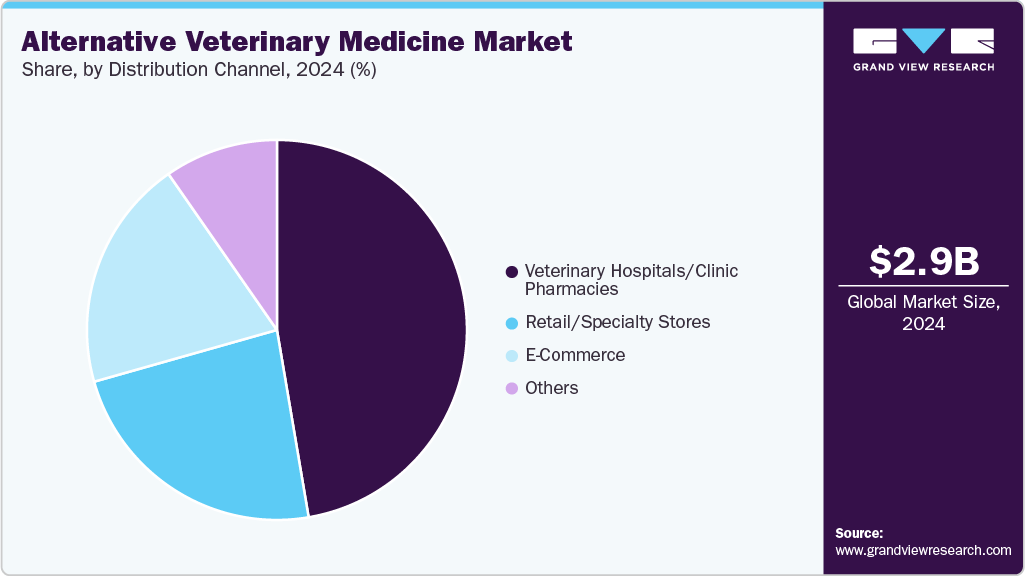
E-Commerce held the highest CAGR in the market, by providing convenient, accessible, and wide-reaching distribution channels for alternative products. Online platforms allow pet owners and livestock farmers to browse, compare, and purchase specialized treatments from the comfort of their homes, often with detailed product information, reviews, and guidance. This convenience is particularly valuable for rural or remote areas with limited veterinary clinics or physical stores. In addition, e-commerce enables manufacturers to directly reach consumers, launch subscription models for chronic care products, and offer personalized recommendations, enhancing product adoption and customer loyalty. By expanding market accessibility and reducing barriers to purchase, e-commerce significantly broadens and penetrates the market.
Regional Insights
North America dominated the global alternative veterinary medicine market in 2024, holding the largest revenue share of 34.29%, due to its high pet ownership rates, increasing pet humanization, and strong awareness of holistic and natural treatments. Pet owners in the U.S. and Canada are willing to invest in safe and effective alternatives to conventional drugs, such as herbal pharmaceuticals and Ayurvedic formulations, for managing chronic conditions, enhancing immunity, and supporting overall wellness. The region also benefits from well-established veterinary healthcare infrastructure, advanced research and development, and favorable regulatory frameworks, which facilitate product innovation and adoption.
U.S. Alternative Veterinary Medicine Market Trends
The alternative veterinary medicine market in the U.S. accounted for the highest market share in the North America market, due to the increasing adoption of holistic and integrative veterinary treatments in the U.S. For instance, according to an article published by Acuro Inc. in October 2024, Pet owners are increasingly seeking natural, non-invasive therapies to address chronic conditions, enhance overall wellness, and support surgery recovery. This shift is evident as holistic care emphasizes treating the pet as a whole, considering both physical and emotional needs, and combining traditional veterinary practices with complementary therapies. Such treatments include acupuncture, herbal medicines, and nutritional supplements, which are gaining popularity due to their perceived safety and efficacy.
Canada alternative veterinary medicine market is expected to grow at a significant CAGR during the forecast period. The increasing prevalence of chronic and lifestyle-related diseases in pets and livestock drives the market. Conditions such as osteoarthritis, obesity, digestive disorders, skin problems, and immune deficiencies are becoming more common due to aging pet populations, changing diets, and intensive livestock farming practices. These chronic conditions often require long-term, safe, and holistic management, which positions herbal pharmaceuticals, Ayurvedic formulations, and other natural therapies as preferred treatment options. As veterinarians and animal owners seek sustainable and side-effect-free alternatives to conventional drugs, the demand for these therapies grows, directly driving the market growth.
Europe Alternative Veterinary Medicine Market Trends
The alternative veterinary medicine market in Europe is driven by supportive initiatives from the government, organizations, and key players. For instance, according to an article published by COST Association, in February 2025, MedPlants4Vet COST Action, running from 2024 to 2027, brings together over 350 experts from more than 45 countries to address knowledge gaps in herbal veterinary medicinal products (HVMPs). By promoting standardization and clearer regulatory pathways, the project facilitates easier market authorization, while its focus on research, education, and professional training improves awareness and credibility of herbal treatments among veterinarians. In addition, the initiative supports environmental sustainability through plant-based alternatives that reduce reliance on synthetic drugs and enhance organic farming practices. These efforts are expanding adoption, improving accessibility, and strengthening the market for alternative veterinary medicines across Europe.
Germany alternative veterinary medicine market is growing at a lucrative rate over the forecast period. This expansion is driven by the increasing use of herbal pharmaceuticals for livestock health management, particularly in dairy and poultry farming. German farmers are adopting plant-based remedies to enhance immunity, digestive health, and growth performance while minimizing the use of antibiotics, in line with national regulations on antibiotic reduction and food safety standards. Research collaborations between universities and veterinary pharmaceutical companies are also developing standardized herbal formulations specifically for livestock, providing evidence-based alternatives that are both effective and compliant with regulatory requirements.
The alternative veterinary medicine market in the UK is expected to grow significantly over the forecast period. Initiatives from key players, including new product launches and regulatory approvals, are driving market growth. For instance, in August 2025, LitPet launched TCM-inspired herbal supplements that merge traditional Chinese medicine principles with modern veterinary science. Products like Pawsitive Powder, featuring herbs such as Schisandra chinensis and valerian and contemporary ingredients like Lactium and DHA, provide holistic support for stress relief and digestive health in pets. The company’s emphasis on scientific validation, GMP-certified manufacturing, and regulatory compliance builds confidence among veterinarians and pet owners, while strategic presentations at events like PATS in Birmingham enhance visibility and adoption. Together, these initiatives, through innovative formulations, credibility, and effective market outreach, are substantially driving market growth in the country.
Asia Pacific Alternative Veterinary Medicine Market Trends
The alternative veterinary medicine market in the Asia Pacific is expected to grow significantly over the forecast period. The market growth is primarily driven by established players offering a diverse portfolio of herbal and traditional veterinary medicines, coupled with the steadily increasing rates of pet ownership, which amplify demand for natural and holistic animal healthcare solutions. Growing awareness among pet owners about the safety and efficacy of alternative therapies further fuels adoption, while supportive initiatives by veterinary professionals and regulatory bodies enhance the credibility and accessibility of these products, collectively propelling the market growth.
China alternative veterinary medicine market is growing significantly due to the increasing adoption of traditional medicines and supplements. For instance, according to an article published by China Daily, in May 2025, veterinary professionals trained in both pharmaceuticals and TCVM are witnessing a rise in consultations, with some clinics reporting up to 100 pet visits per day, and approximately 10% of these seeking TCVM treatments. This surge in interest is further supported by a steady increase in pet ownership, with the number of pet dogs and cats in China reaching 124 million in 2023, marking a 2.1% rise from the previous year. As pet owners become more informed about the benefits of TCVM, the market for alternative veterinary treatments continues to expand, driven by factors such as increased pet ownership, successful treatment outcomes, and a growing preference for holistic approaches to animal healthcare.
The alternative veterinary medicine market in India is driven by the government’s focus on promoting Ayurvedic and herbal treatments for livestock and poultry. Initiatives such as releasing the Standard Veterinary Treatment Guidelines (SVTG) encourage the regulated use of Ayurvedic medicines and reduce reliance on antibiotics, creating a favorable environment for herbal veterinary products. In addition, increasing awareness among veterinarians and livestock farmers about the efficacy and safety of herbal formulations is boosting adoption, particularly for managing chronic conditions and improving overall animal health. These factors, regulatory support, professional endorsement, and a shift toward natural treatment alternatives, collectively fuel market expansion in India.
Latin America Alternative Veterinary Medicine Market Trends
The alternative veterinary medicine market in Latin America is expected to grow significantly, owing to the high pet ownership and rising demand for milk and animal-derived products. As livestock production intensifies to meet domestic and export needs, farmers increasingly turn to natural and herbal veterinary treatments to maintain animal health, enhance productivity, and ensure residue-free food products. Consumers across the region are also becoming more conscious about food safety and sustainability, encouraging the adoption of plant-based remedies and holistic veterinary care as alternatives to synthetic drugs and antibiotics. This shift supports healthier livestock and aligns with global trends toward eco-friendly and chemical-free animal farming, accelerating the expansion of alternative veterinary medicine in Latin America.
Brazil alternative veterinary medicine market is witnessing notable growth due to the rising poultry production and increasing export production. For instance, according to an article published by the USDA, in September 2025, Brazil stands as the third-largest chicken meat producer globally and the largest chicken meat exporter. The sector’s expansion, projected to grow by 3% by 2026, is fueled by consistent external demand, a weaker currency, and increasing domestic consumption. To sustain export quality and meet global restrictions on antibiotic usage, poultry producers are increasingly turning to natural and herbal veterinary solutions such as probiotics, essential oils, and phytogenic additives. These alternatives enhance disease resistance, growth performance, and flock welfare while ensuring residue-free meat. In addition, lower production costs and a growing focus on sustainable and eco-friendly poultry management practices further encourage the adoption of alternative veterinary medicines across Brazil’s thriving poultry industry.
Middle East & Africa Alternative Veterinary Medicine Market Trends
The alternative veterinary medicine market in the Middle East and Africa is growing due to growing pet ownership, rising pet humanization, and increasing animal healthcare awareness. Increasing numbers of households, especially in urban areas of the UAE, Saudi Arabia, and Qatar, are adopting pets and seeking natural ways to manage their health, behavior, and wellness. Pet owners are becoming more cautious about the long-term effects of chemical-based medicines. They are shifting toward herbal supplements, homeopathic remedies, and nutraceuticals for treating common conditions such as anxiety, skin allergies, and joint pain.
South Africa alternative veterinary medicine market is propelled by growing awareness of pet wellness, increasing urban pet ownership, and a rising preference for natural and preventive healthcare solutions. As more households adopt dogs and cats as family members, there is a growing inclination toward holistic treatments that ensure long-term health without the side effects of conventional drugs. Pet owners are increasingly using herbal supplements, homeopathic formulations, and natural pain relief remedies to manage conditions such as skin allergies, digestive disorders, and other acute and chronic disorders.
The alternative veterinary medicine market in the UAE is experiencing growth due to the rising pet population and evolving attitude toward holistic pet care. As more residents, especially in urban centers like Dubai and Abu Dhabi, view pets as family members, the demand for natural, preventive, and wellness-oriented treatments has surged. Pet owners are increasingly turning to herbal supplements, homeopathic products, and nutraceuticals to address issues such as anxiety, allergies, and joint problems without relying heavily on chemical-based drugs. The expansion of modern veterinary clinics and pet wellness centers offering integrative therapies such as acupuncture and herbal medicine further supports this trend.
Key Alternative Veterinary Medicine Company Insights
The market is strengthening as established pharmaceutical companies and emerging natural health brands expand their product portfolios to meet the growing demand for holistic animal care. Key players focus on developing herbal formulations, probiotics, nutraceuticals, and homeopathic remedies to cater to companion animals and livestock while aligning with global trends of reduced antibiotic usage. The market is witnessing continuous innovation in product efficacy, formulation quality, and delivery methods, such as palatable supplements and easy-to-administer solutions.
Key Alternative Veterinary Medicine Companies:
The following are the leading companies in the alternative veterinary medicine market. These companies collectively hold the largest market share and dictate industry trends.
- Himalaya Wellness Company
- Alicanto Vetcare
- Natural Remedies
- Zenex Health Animal Health
- AYURSUN PHARMA
- GreenVet
- INDIAN GENOMIX (P) LTD
- INDIAN HERBS
- AMORVET
- NU Alter Remedies
Recent Developments
-
In September 2024, Herbal Paws introduced a new range of pet supplements and grooming products to expand its reach within the UK market. The company has announced that it will focus on partnering with pet stores and distribution suppliers nationwide to make these products widely available, strengthening its presence in the growing pet care segment.
-
In May 2023, Charlotte’s Web expanded its distribution network through a partnership with Phillips Pet Food & Supplies, America’s largest distributor in the pet specialty retail sector. This collaboration aims to enhance access to Charlotte’s Web’s CBD pet products, including specialized formulations like calming aids and joint support chews, across over 6,000 retail locations nationwide.
Alternative Veterinary Medicine Market Report Scope
|
Report Attribute
|
Details
|
|
Market size value in 2025
|
USD 3.14 billion
|
|
Revenue forecast in 2033
|
USD 9.23 billion
|
|
Growth rate
|
CAGR of 14.39% from 2025 to 2033
|
|
Actual data
|
2021 – 2024
|
|
Forecast period
|
2025 – 2033
|
|
Quantitative units
|
Revenue in USD million/billion and CAGR from 2025 to 2033
|
|
Report coverage
|
Revenue forecast, company ranking, competitive landscape, growth factors, and trends
|
|
Segments covered
|
Product, animal, type, route of administration, distribution channel, region
|
|
Regional scope
|
North America; Europe; Asia Pacific; Latin America; MEA
|
|
Country scope
|
U.S.; Canada; Mexico; UK; Germany; France; Italy; Spain; Denmark; Sweden; Norway; Japan; China; India; Thailand; South Korea; Australia; Brazil; Argentina; South Africa; UAE; Saudi Arabia; Kuwait; Qatar; Oman
|
|
Key companies profiled
|
Himalaya Wellness Company; Alicanto Vetcare; Natural Remedies; Zenex Health Animal Health; AYURSUN PHARMA; GreenVet; INDIAN GENOMIX (P) LTD; INDIAN HERBS; AMORVET; NU Alter Remedies
|
|
Customization scope
|
Free report customization (equivalent up to 8 analysts working days) with purchase. Addition or alteration to country, regional & segment scope.
|
|
Pricing and purchase options
|
Avail customized purchase options to meet your exact research needs. Explore purchase options
|
Global Alternative Veterinary Medicine Market Report Segmentation
This report forecasts revenue growth at global, regional, and country levels and provides an analysis of the latest industry trends in each of the sub-segments from 2021 to 2033. For this study, Grand View Research has segmented the global alternative veterinary medicine market report based on product, animal, type, route of administration, distribution channel, and region:
-
Product Outlook (Revenue, USD Million, 2021 – 2033)
-
Pharmaceuticals
-
Antimicrobial
-
Anti-inflammatory
-
Analgesics
-
Others
-
-
Nutritional Supplements
-
Feed Additives
-
-
Animal Outlook (Revenue, USD Million, 2021 – 2033)
-
Companion Animals
-
Dogs
-
Cats
-
Horses
-
Other Companion Animals
-
-
Production Animals
-
Cattle
-
Poultry
-
Swine
-
Other Production Animals
-
-
-
Type Outlook (Revenue, USD Million, 2021 – 2033)
-
Route of Administration Outlook (Revenue, USD Million, 2021 – 2033)
-
Distribution Channel Outlook (Revenue, USD Million, 2021 – 2033)
-
Region Outlook (Revenue, USD Million, 2021 – 2033)
-
North America
-
Europe
-
UK
-
Germany
-
France
-
Italy
-
Spain
-
Denmark
-
Sweden
-
Norway
-
-
Asia Pacific
-
Japan
-
China
-
India
-
Australia
-
Thailand
-
South Korea
-
-
Latin America
-
Middle East & Africa
-
South Africa
-
UAE
-
Saudi Arabia
-
Kuwait
-
Qatar
-
Oman
-
-
link